10. Window-Mounted Butterfly Feeder
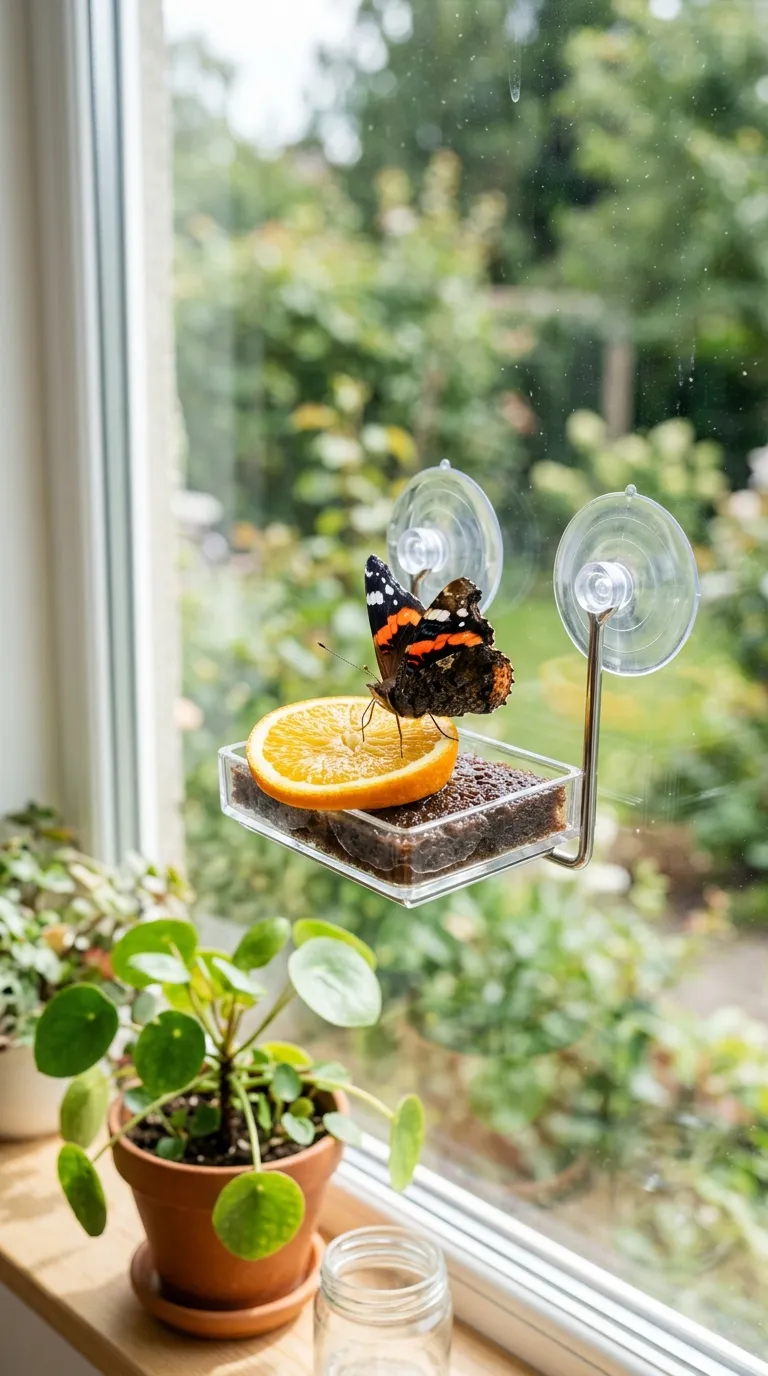
If you live in an apartment or want to watch butterflies up close, a window-mounted feeder is the answer. It attaches with suction cups and brings the action right to your glass.
- Materials: A small suction-cup feeder or a clear plastic tray, two suction cups, a natural sponge, sugar water, and a piece of overripe fruit.
- Time: 5 minutes
- Difficulty: Easy
Attach the suction cups to a clean window, then snap the tray into place. Soak the sponge in sugar water and place it in the tray. Add a slice of overripe banana or orange for extra appeal. Butterflies will land on the tray to feed, giving you a front-row seat. Choose a window that gets morning sun but isn’t exposed to harsh afternoon heat, which can spoil the nectar quickly.
You can decorate the tray with waterproof stickers or paint, but keep it clear if you want to see the butterflies from inside. For a budget-friendly version, use a small plastic lid and double-sided suction cups.
Common mistake: Placing the feeder on a window that gets too hot—the sugar water can ferment and become harmful.
💡 Pro Tip: Use two suction cups for extra stability, and clean the glass with rubbing alcohol before attaching them.
What is the best sugar water ratio for a butterfly feeder?
A simple and safe ratio is one part white sugar to four parts water. Boil the water first, then stir in the sugar until it dissolves completely. Let it cool before filling your feeder. Avoid using honey, brown sugar, or artificial sweeteners—these can be harmful to butterflies.
How often should I clean my butterfly feeder?
In warm weather, clean your feeder every two to three days. Rinse all parts with hot water and a mild dish soap, then let them dry completely before refilling. In cooler weather, once a week is usually enough. Regular cleaning prevents mold, bacteria, and fermentation.
Do butterfly feeders attract wasps and ants?
They can, especially if the feeder drips or contains overripe fruit. To reduce wasps, keep the feeding surface moist but not flooded, and avoid open fruit. For ants, apply a thin line of petroleum jelly around the hanging string or place the feeder on a moat-like base filled with water.
Can I use honey instead of sugar for butterflies?
No. Honey can contain spores of bacteria and fungi that are harmful to butterflies. It also ferments quickly. White granulated sugar is the safest and most effective choice for homemade nectar.
Where should I place a butterfly feeder in my backyard?
Choose a sunny, sheltered spot near nectar-rich flowers. Ideally, the feeder should be at least three feet off the ground and away from bird feeders, which can scare butterflies. A location with morning sun and afternoon shade is ideal.
What materials are safe for DIY butterfly feeders?
Safe materials include glass, food-grade plastic, terracotta, natural cotton rope, unbleached sponges, and untreated wood. Avoid pressure-treated wood, synthetic sponges with dyes, and any material that might leach chemicals into the nectar.
How long does it take for butterflies to find a new feeder?
It varies. Some butterflies may discover a new feeder within a few hours, while others may take several days or even a week. Be patient, keep the feeder clean and stocked, and plant plenty of nectar flowers nearby to increase your chances.
Creating a butterfly-friendly backyard doesn’t require expensive equipment or a lot of space. A simple jar, a terracotta saucer, or even a recycled bottle can become a lifeline for these delicate pollinators. The ten DIY garden butterfly feeder ideas above are meant to be starting points—tweak them, paint them, hang them where you’ll see them every day. The real magic happens when you notice the first hesitant flutter, then the second, and soon a whole host of wings dancing around your garden. So pick one project this weekend, gather your materials, and make it your own. Your backyard butterflies will thank you.