
A living room should feel like the heart of the home. It is the place where family gathers, guests feel welcome, and quiet evenings become more relaxing. A warm living room is not only about temperature—it is about atmosphere, texture, color, and thoughtful details that create comfort. Even a modern room can feel inviting when it includes the right design choices.
If your living room feels too plain, cold, or unfinished, small updates can completely change its mood. Soft fabrics, layered lighting, natural materials, and warm tones all help create a cozy setting without requiring a full renovation.
Here are ten warm living room ideas that can help you transform your space into a comfortable retreat.

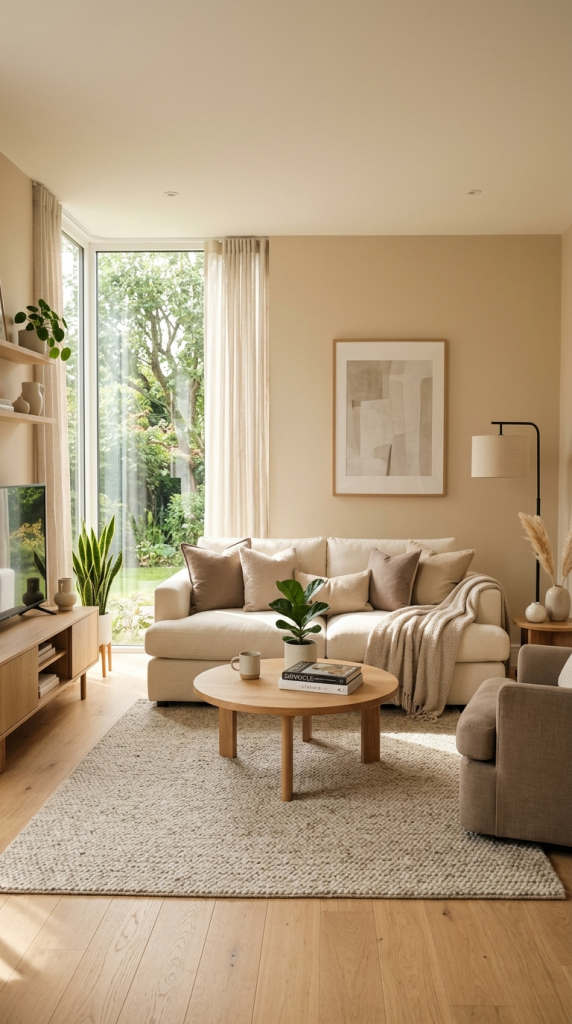
1. Choose Warm Neutral Colors
Color sets the tone of a room faster than anything else. Warm neutrals instantly make a living room feel softer and more welcoming. Shades such as beige, creamy white, taupe, warm gray, camel, and soft brown work beautifully because they reflect light gently instead of feeling harsh.
Instead of using bright white walls, try a creamy off-white or a soft sand color. These shades create depth and warmth without making the room feel dark. Warm neutrals also pair well with almost any furniture style, whether your home is modern, rustic, farmhouse, or traditional.
Even if you do not want to repaint the entire room, adding warm-colored cushions, curtains, or rugs can create a similar effect.
2. Layer Soft Textures
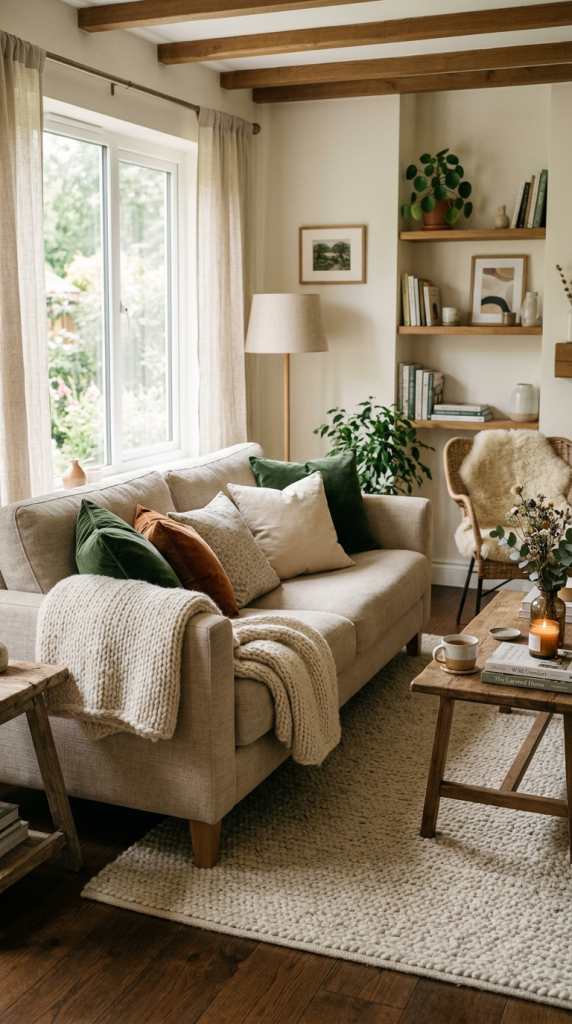
Texture is one of the easiest ways to make a room feel cozy. A living room with only smooth surfaces can feel flat, while layered textures add comfort and visual warmth.
Start with soft throw blankets draped over the sofa. Add cushions in different fabrics such as velvet, linen, boucle, or knit. A plush area rug under the coffee table can also change the entire feeling of the room.
The goal is not to match every texture perfectly. In fact, mixing materials makes the space more interesting. For example, a linen sofa with velvet cushions and a chunky knit throw feels balanced and inviting.
When a room looks touchable, it automatically feels warmer.
3. Use Warm Lighting Instead of Harsh Bright Light
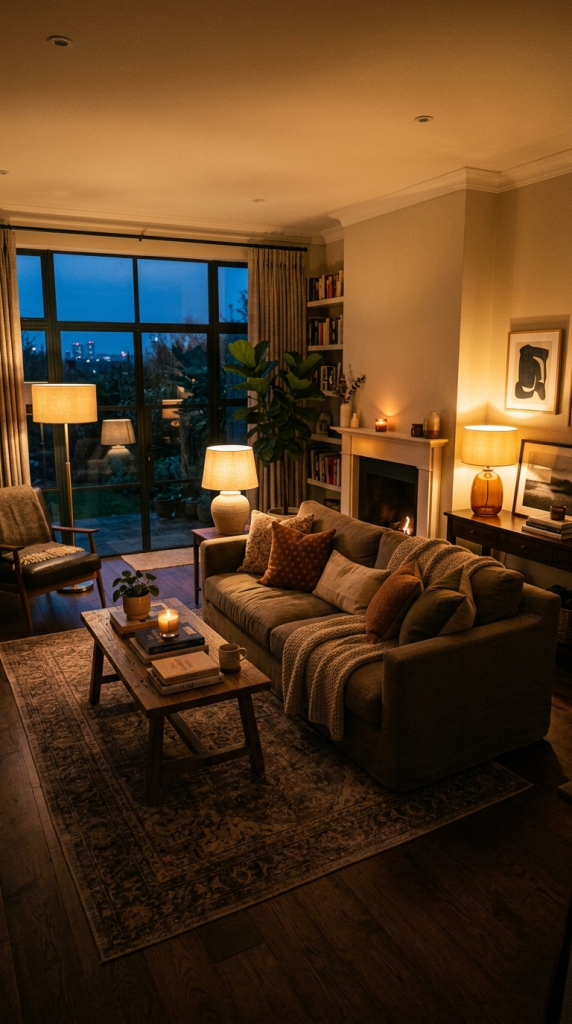
Lighting plays a major role in creating atmosphere. A single bright overhead light often makes a room feel cold and overly formal. Warm living rooms usually rely on layered lighting instead.
Table lamps, floor lamps, and wall sconces create a softer glow. Warm white bulbs help create a relaxed mood, especially in the evening. Lamps placed at different heights make the room feel more intimate and welcoming.
A lamp beside a reading chair, a small lamp on a side table, and soft ceiling lighting together can make the room feel calm and lived-in.
If possible, dimmable lighting is even better because you can adjust the brightness based on the time of day.
4. Bring in Natural Wood Elements
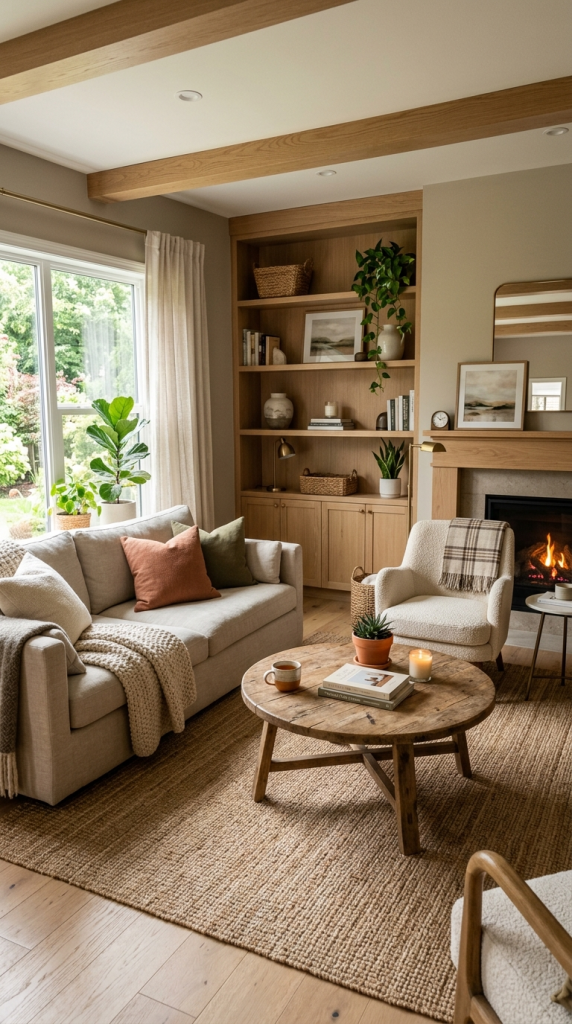
Natural wood adds instant warmth because it introduces organic texture and earthy color. Even a modern living room can feel more inviting with wooden details.
A wooden coffee table, side table, shelving unit, or picture frames can soften a space filled with metal or glass. Medium and darker wood tones tend to feel especially warm, though lighter oak can also work beautifully.
Wood does not need to dominate the room. Even a few natural accents can make a noticeable difference. The goal is to create balance between polished surfaces and natural materials.
Wood brings a grounded, timeless feeling that helps a room feel comfortable rather than overly styled.
5. Add a Cozy Area Rug
A large rug can visually anchor the living room while making it feel warmer and softer. Bare floors often make a room feel unfinished, especially if the flooring is tile, stone, or dark wood.
Choose a rug with warm undertones—cream, rust, beige, terracotta, muted gold, or soft brown are all excellent options. Rugs with subtle patterns can also add character without overwhelming the room.
Size matters. A rug that is too small can make the room feel disconnected. Ideally, at least the front legs of your seating should rest on the rug to create a more unified look.
A soft rug underfoot makes the room physically and visually more comfortable.
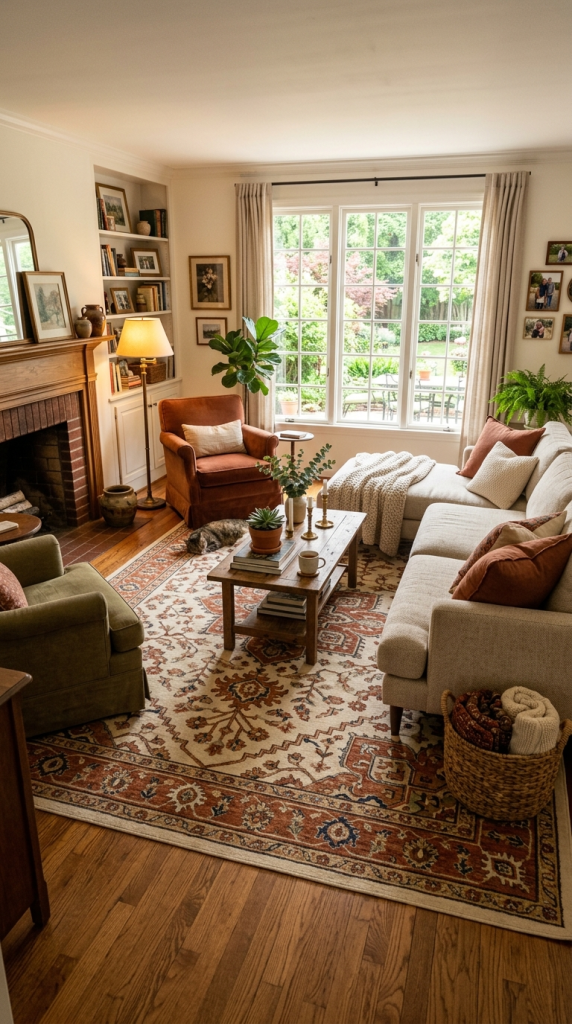
6. Decorate with Earthy Accents
Warm living rooms often feel connected to nature. Earthy decorative accents help create that effect.
Think terracotta vases, woven baskets, ceramic bowls, stone accessories, dried branches, or clay planters. These materials add texture and natural warmth without making the room feel cluttered.
Earth-inspired colors such as rust, olive, caramel, ochre, and muted brown work especially well in decorative details. Even a few small pieces can bring life and softness to a neutral room.
The beauty of earthy accents is that they feel relaxed and timeless rather than trendy.
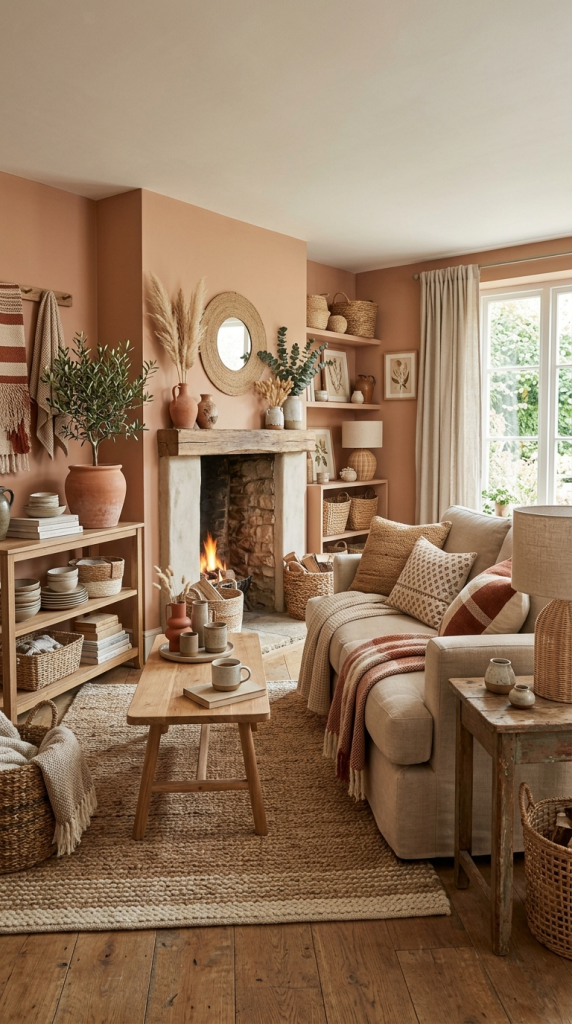
7. Create a Focal Point Around the Seating Area
A warm living room should encourage conversation and relaxation. That often starts with the furniture layout.
Arrange seating so it feels connected. Sofas and chairs facing each other or angled slightly inward create a more intimate atmosphere than furniture pushed against the walls.
A coffee table in the center helps anchor the arrangement. Adding books, candles, or a small tray can make the seating area feel styled but still practical.
If your room has a fireplace, large window, or statement art piece, use it as the focal point. When the furniture arrangement feels intentional, the whole room feels calmer and more welcoming.
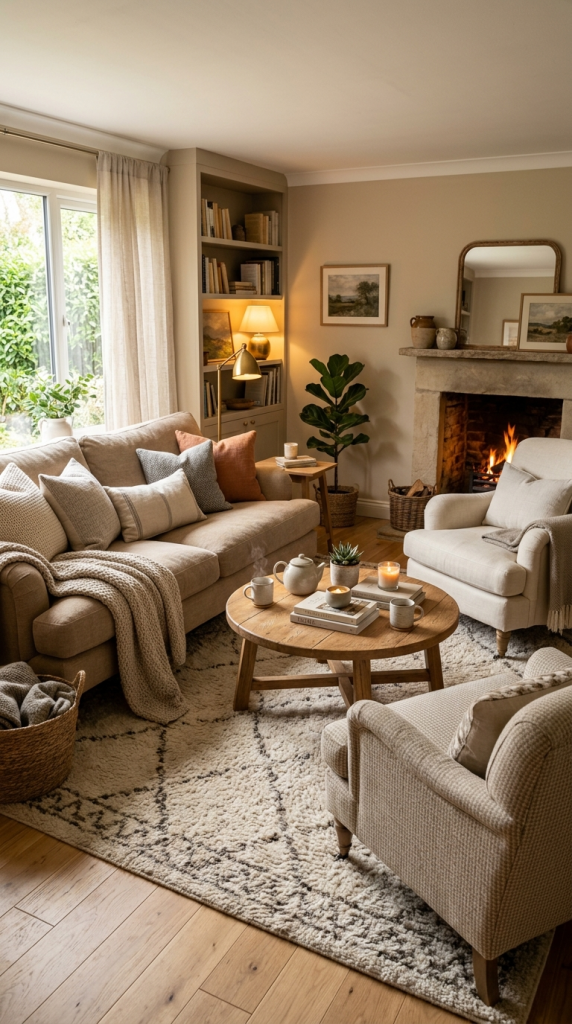
8. Include Curtains for Softness
Curtains do more than cover windows—they soften the room visually and help create warmth.
Choose fabrics like linen, cotton, or textured blends in warm neutrals or muted earth tones. Floor-length curtains often make the room feel more polished and cozy at the same time.
Even if you love natural light, curtains can still help frame the windows and add softness to walls. Rooms without fabric often feel harder and less inviting.
A simple pair of warm-toned curtains can make a surprisingly big impact.
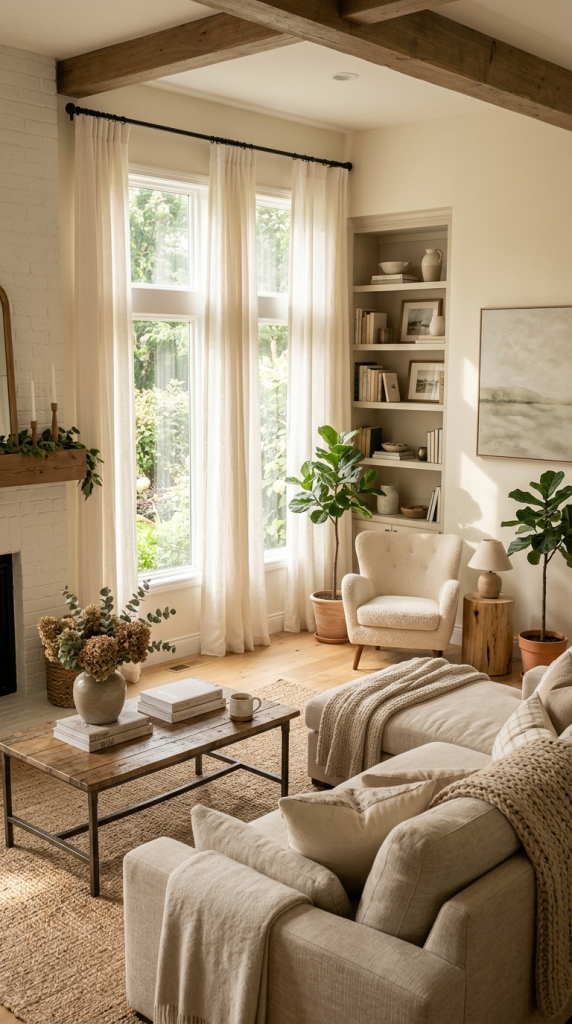
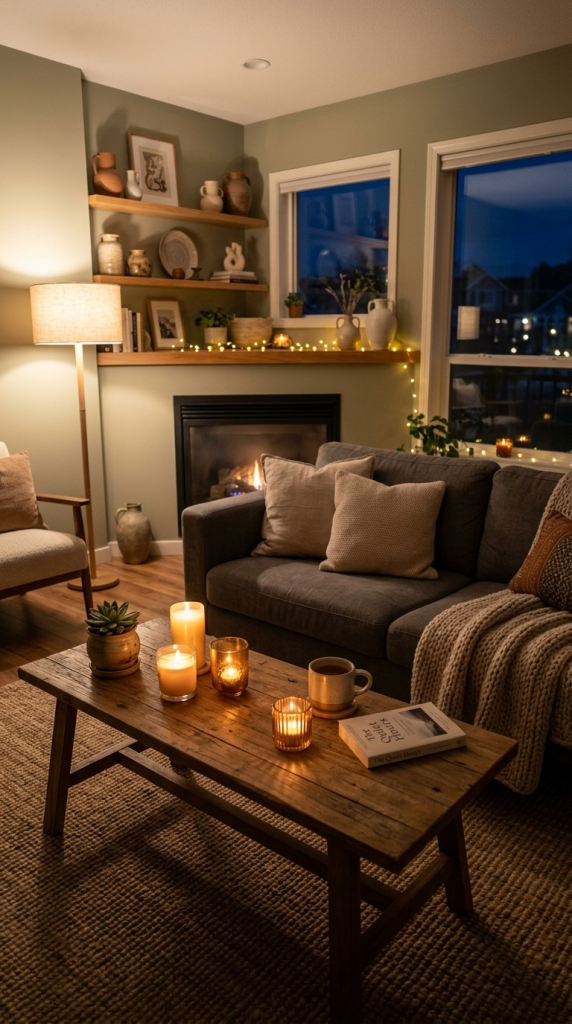
9. Style with Candles and Ambient Decor
Small details can completely change the mood of a living room. Candles are one of the easiest ways to add warmth, even when they are not lit.
Cluster candles of different heights on a tray, style them on a shelf, or place one on the coffee table. Lanterns, soft ceramic pieces, and small decorative bowls also create a warm layered look.
These elements make the space feel personal and lived-in rather than overly perfect. Warm rooms often feel collected over time, not decorated all at once.
Ambient decor helps create a peaceful atmosphere that feels ideal for evenings and quiet weekends.
10. Add Greenery for Life and Freshness
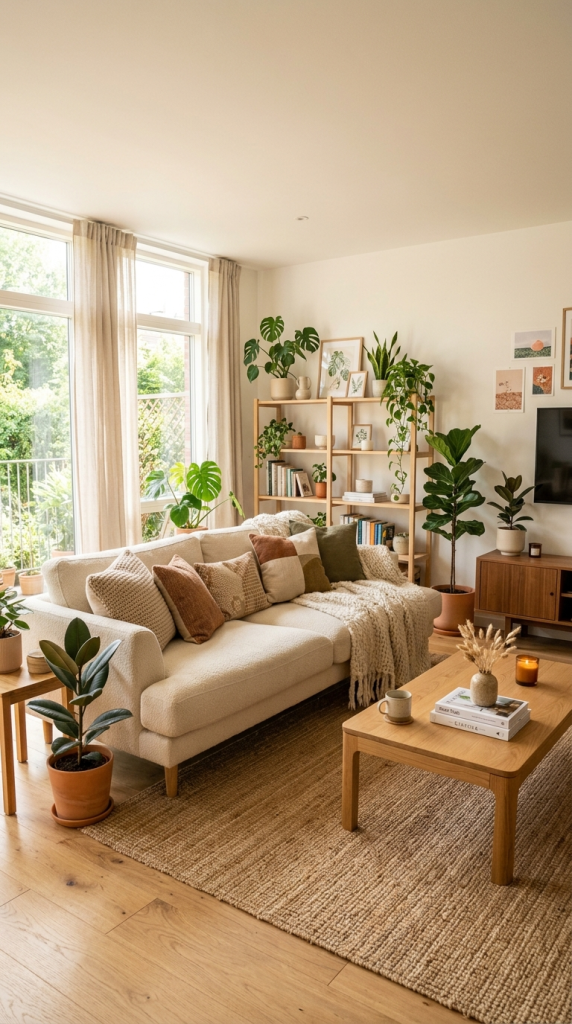
Plants bring life into a room and make it feel instantly more inviting. A warm living room does not need many plants—just a few thoughtfully placed ones can make a difference.
A tall plant in a corner softens empty space. Smaller plants on shelves or side tables create freshness and balance. Natural greenery pairs beautifully with warm neutrals, wood tones, and textured fabrics.
If you prefer low-maintenance options, dried stems, olive branches, or eucalyptus can also work well.
Greenery adds softness, color, and a natural sense of calm that completes the cozy atmosphere.
Leave a Reply