A beautiful bathroom is not only about color, fixtures, or layout. Texture plays a major role in making the space feel warm, layered, and visually interesting. Even the simplest bathroom can feel luxurious when different materials and finishes work together. Textured surfaces catch light differently, create depth, and turn an ordinary bathroom into a thoughtfully designed retreat.
From natural stone walls to woven baskets and ribbed glass, adding texture can completely transform the atmosphere of your bathroom. Whether your style is modern, rustic, minimalist, or spa-inspired, textured elements help create a balanced and inviting look.
Here are 10 textured bathroom ideas that can instantly upgrade your space.
1. Natural Stone Accent Walls
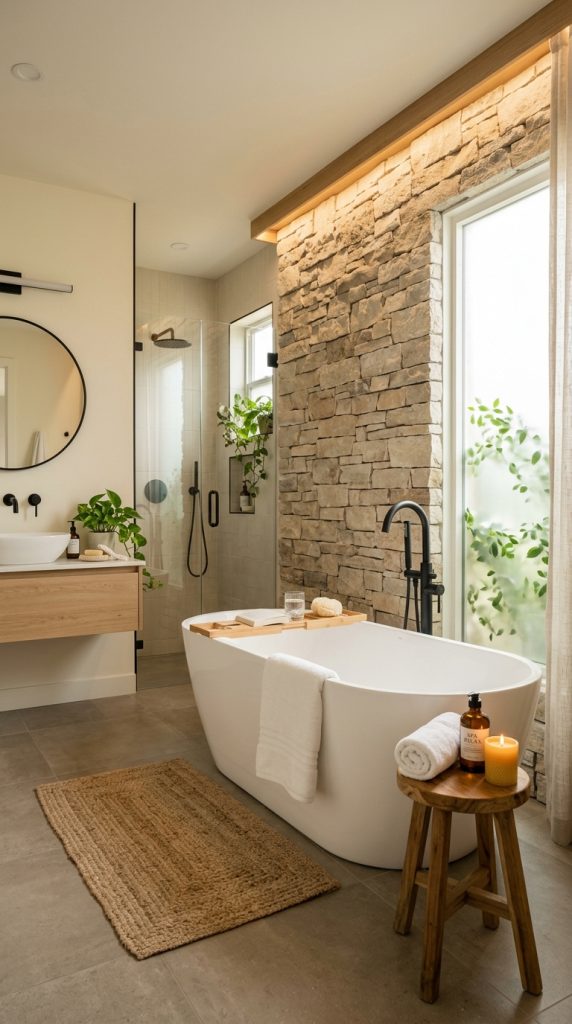
Natural stone is one of the most timeless ways to introduce texture into a bathroom. Materials like slate, travertine, limestone, or stacked stone bring organic depth and character that flat painted walls simply cannot match.
A stone accent wall behind the vanity or bathtub becomes an eye-catching focal point. The irregular surface reflects light beautifully and creates a calming, spa-like mood. Stone also pairs well with wood, glass, and metal, making it easy to blend into many design styles.
If using real stone feels too heavy or expensive, textured stone-look tiles can create a similar effect with easier installation and maintenance.
2. Textured Ceramic or Porcelain Tiles
Tiles are one of the easiest ways to add texture while keeping the bathroom functional. Instead of standard flat tiles, choose options with raised patterns, grooves, ripples, or handcrafted finishes.
Textured tiles work especially well in shower walls, backsplashes, or feature walls. Vertical ridged tiles can make a small bathroom feel taller, while soft wave-like tiles add movement and softness.
Neutral colors such as white, beige, gray, or sand allow the texture to stand out without making the room feel busy. The beauty of textured tiles is that they create interest while still feeling clean and modern.

3. Warm Wood Finishes
Wood introduces natural texture and warmth, helping balance the cold surfaces often found in bathrooms. A wooden vanity, floating shelf, stool, or framed mirror can instantly soften the overall look.
Lighter woods like oak or ash create an airy Scandinavian feel, while darker woods bring richness and contrast. Even a small wood detail can make a noticeable difference.
In humid environments, choose sealed or moisture-resistant wood finishes. Wood-look porcelain can also be a practical alternative if you want the appearance of grain and texture without extra upkeep.

4. Plaster or Limewash Walls
For a soft and sophisticated textured finish, plaster and limewash walls are excellent choices. These finishes create subtle variation in tone and depth, giving walls a handcrafted and elegant appearance.
Unlike perfectly smooth painted drywall, plaster has movement and dimension. It works especially well in modern, Mediterranean, or minimalist bathrooms where texture replaces heavy decoration.
Soft earthy shades such as warm white, clay, taupe, or muted gray help highlight the layered surface. Even a very simple bathroom can feel elevated when the walls have a rich tactile quality.

5. Woven Baskets and Natural Fiber Storage
Storage can also become part of your bathroom’s texture story. Woven baskets made from seagrass, rattan, wicker, or jute bring natural softness into the room.
These materials contrast beautifully with hard surfaces like tile, stone, and glass. They also make the space feel more relaxed and lived-in.
Use woven baskets under the vanity, beside the bathtub, or on open shelves to store towels, toiletries, or extra toilet paper. This small addition makes the bathroom feel styled rather than purely functional.

6. Ribbed or Fluted Glass Details
Glass does not have to be completely smooth to look elegant. Ribbed or fluted glass adds subtle texture while keeping the bathroom bright and airy.
This style works beautifully for shower partitions, cabinet doors, pendant lighting, or small decorative accessories. The vertical lines create a soft visual rhythm and gently diffuse light, adding privacy without making the room feel closed in.
Fluted glass is especially effective in modern and contemporary bathrooms because it adds texture in a refined and understated way.

7. Layered Textiles for Softness
Textiles are one of the simplest ways to bring comfort and texture into a bathroom. Plush bath mats, waffle towels, linen shower curtains, and cotton hand towels create softness that balances harder surfaces.
Layering textiles adds warmth while making the space feel more inviting. Instead of choosing everything in the same finish, mix different fabric textures for a richer look.
For example, a waffle towel paired with a thick cotton bath mat creates a subtle layered effect. Keeping the colors neutral helps the textures become the main visual feature.

8. Matte and Rough Metal Finishes
Metal details may seem small, but they can strongly influence the feel of a bathroom. Matte black, brushed brass, aged bronze, or hammered metal finishes all add texture in a subtle but noticeable way.
Instead of shiny polished surfaces, textured metals feel softer and more sophisticated. Consider using them for faucets, mirror frames, drawer pulls, towel bars, or wall sconces.
A hammered metal sink or textured brass hardware can bring character without overwhelming the room. These details work especially well when paired with stone, wood, or plaster surfaces.

9. Textured Ceiling Treatments
The ceiling is often overlooked, but it can add unexpected dimension to a bathroom. Wood slats, beadboard, subtle paneling, or even textured paint can make the room feel more finished and thoughtfully designed.
In smaller bathrooms, adding texture above draws the eye upward and creates a stronger sense of height. In larger bathrooms, it helps the room feel cozier and more layered.
A light-toned wood ceiling above a freestanding tub can create a spa-like atmosphere, while white beadboard adds charm to farmhouse or coastal designs.

10. Plants and Organic Greenery
Living greenery adds natural texture that no manufactured material can fully replicate. The shape of leaves, branches, and stems introduces softness, movement, and freshness.
Bathrooms often benefit from moisture-loving plants such as ferns, pothos, peace lilies, or snake plants. Even a single plant on a vanity or shelf can make the space feel more alive.
Pair plants with ceramic pots, stone planters, or woven containers for an extra layer of texture. This combination helps create a calm and organic bathroom environment.


Leave a Reply